

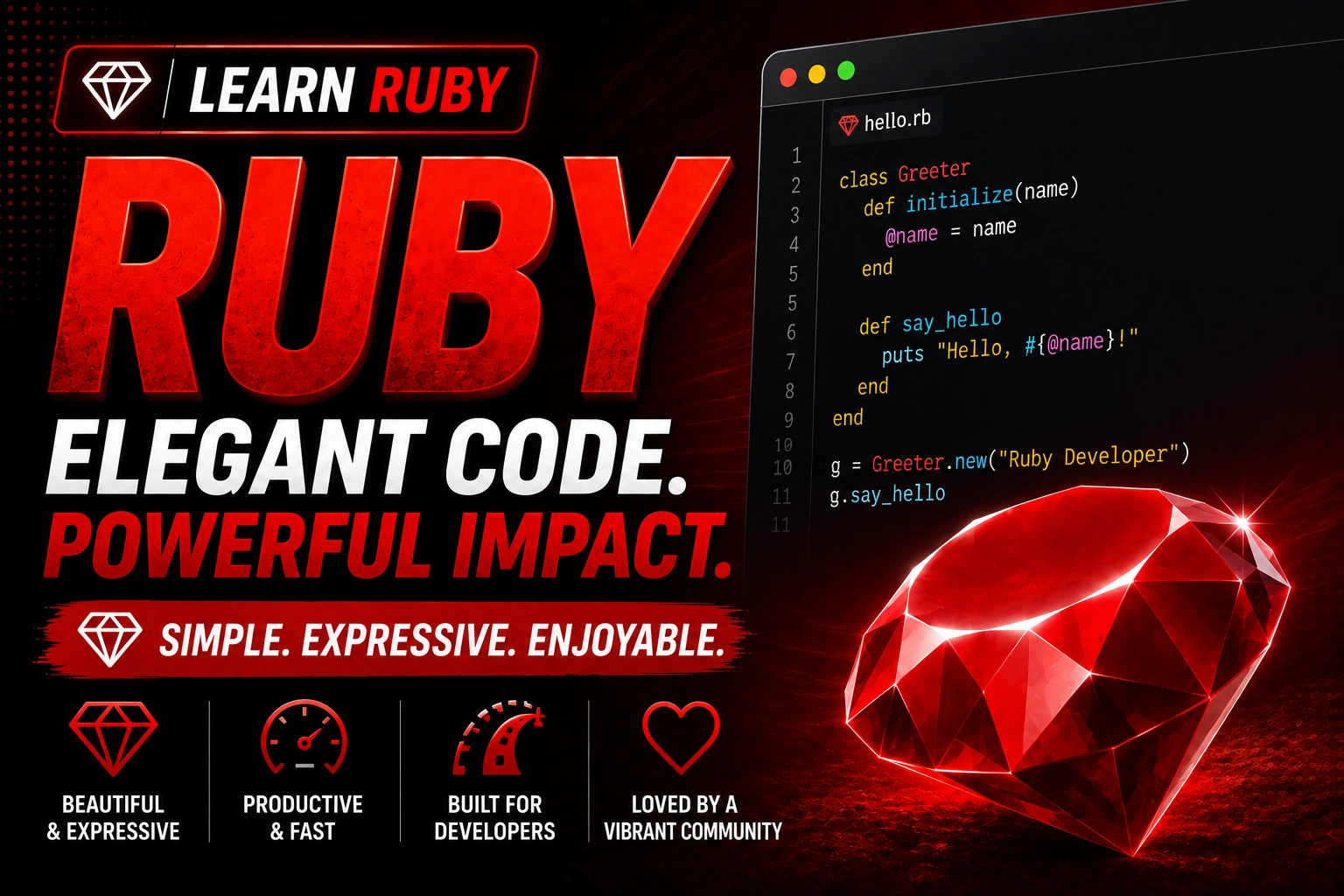
Ruby Programming Course
Master Ruby programming with a practical, industry-focused curriculum designed for modern web development, automation, backend systems, and software engineering. Ruby is known for its elegant syntax, developer productivity, and powerful ecosystem.
This course covers Ruby fundamentals, object-oriented programming, collections, modules, database connectivity, APIs, testing, and application development concepts used in professional projects.
Whether you want to become a backend developer, web developer, automation engineer, or Ruby on Rails developer, this course provides the essential skills needed to build scalable applications.
Start LearningCourse Description
- Learn Ruby programming from beginner to advanced level.
- Master object-oriented programming concepts and design principles.
- Write clean, readable, and maintainable Ruby code.
- Work with collections, hashes, arrays, and advanced data structures.
- Build reusable applications using modules and mixins.
- Learn file handling, database operations, and API integration.
- Develop automation scripts and backend applications.
- Understand software testing and debugging techniques.
- Prepare for Ruby on Rails and modern web development.
- Gain hands-on experience through practical coding projects.
Course Content
Module 1: Ruby Variables and Data Types
- Variables and Constants
- Numbers and Arithmetic Operations
- Strings and String Manipulation
- Booleans and Nil Values
- Type Conversion
- User Input and Output
Module 2: Operators and Expressions
- Arithmetic Operators
- Comparison Operators
- Logical Operators
- Assignment Operators
- Conditional Expressions
- Operator Precedence
Module 3: Control Flow Statements
- If and Else Statements
- Case Statements
- Unless Statement
- While Loops
- Until Loops
- For and Each Loops
Module 4: Methods and Blocks
- Defining Methods
- Method Parameters
- Return Values
- Blocks and Yield
- Lambda Functions
- Procs and Closures
Module 5: Object-Oriented Programming
- Classes and Objects
- Constructors
- Instance Variables
- Inheritance
- Polymorphism
- Encapsulation
Module 6: Modules and Mixins
- Creating Modules
- Including Modules
- Mixins
- Namespaces
- Reusable Code Design
- Code Organization
Module 7: Arrays and Hashes
- Working with Arrays
- Array Methods
- Hash Creation
- Hash Operations
- Iteration Techniques
- Collection Manipulation
Module 8: Exception Handling
- Begin and Rescue
- Ensure Block
- Raise Exceptions
- Custom Exceptions
- Error Handling Best Practices
- Debugging Techniques
Module 9: File Handling and Data Processing
- Reading Files
- Writing Files
- Working with CSV Files
- JSON Processing
- File Management
- Data Validation
Module 10: Database Connectivity
- Database Fundamentals
- Connecting Ruby with SQL Databases
- Executing Queries
- CRUD Operations
- Database Transactions
- Data Modeling Concepts
Module 11: API Development and Integration
- HTTP Requests
- REST APIs
- JSON APIs
- API Authentication
- Response Handling
- Error Management
Module 12: Testing and Quality Assurance
- Unit Testing
- Test Cases
- Assertions
- Automated Testing
- Mock Objects
- Code Coverage
Module 13: Ruby Gems and Package Management
- Installing Gems
- Managing Dependencies
- Bundler
- Popular Ruby Libraries
- Gem Creation
- Version Management
Module 14: Ruby on Rails Fundamentals
- Rails Architecture
- MVC Pattern
- Routing Concepts
- Models and Controllers
- Views and Templates
- Rails Project Structure
Module 15: Real-World Ruby Projects
- Automation Scripts
- Database Applications
- REST API Project
- Business Management System
- Deployment Fundamentals
- Industry Best Practices